1
/
of
1
ALPHA PHARMA SERVICE SRL
Covid-19 Vivadiag Rapid Antigen Test Qualitative Determination of SARS-CoV-2 Antigens in Nasal/Nasopharyngeal/Oropharyngeal Swabs by Immunochromatography For Professional Use
Covid-19 Vivadiag Rapid Antigen Test Qualitative Determination of SARS-CoV-2 Antigens in Nasal/Nasopharyngeal/Oropharyngeal Swabs by Immunochromatography For Professional Use
Regular price
€15,00 EUR
Regular price
€32,00 EUR
Sale price
€15,00 EUR
Taxes included.
Shipping calculated at checkout.
Quantity
Couldn't load pickup availability
MINSAN: 981212689
EAN: 811900031502
DITTA: ALPHA PHARMA SERVICE SRL
VivaDiag
SARS-CoV-2 Antigen Rapid Test
For professional use only
Description
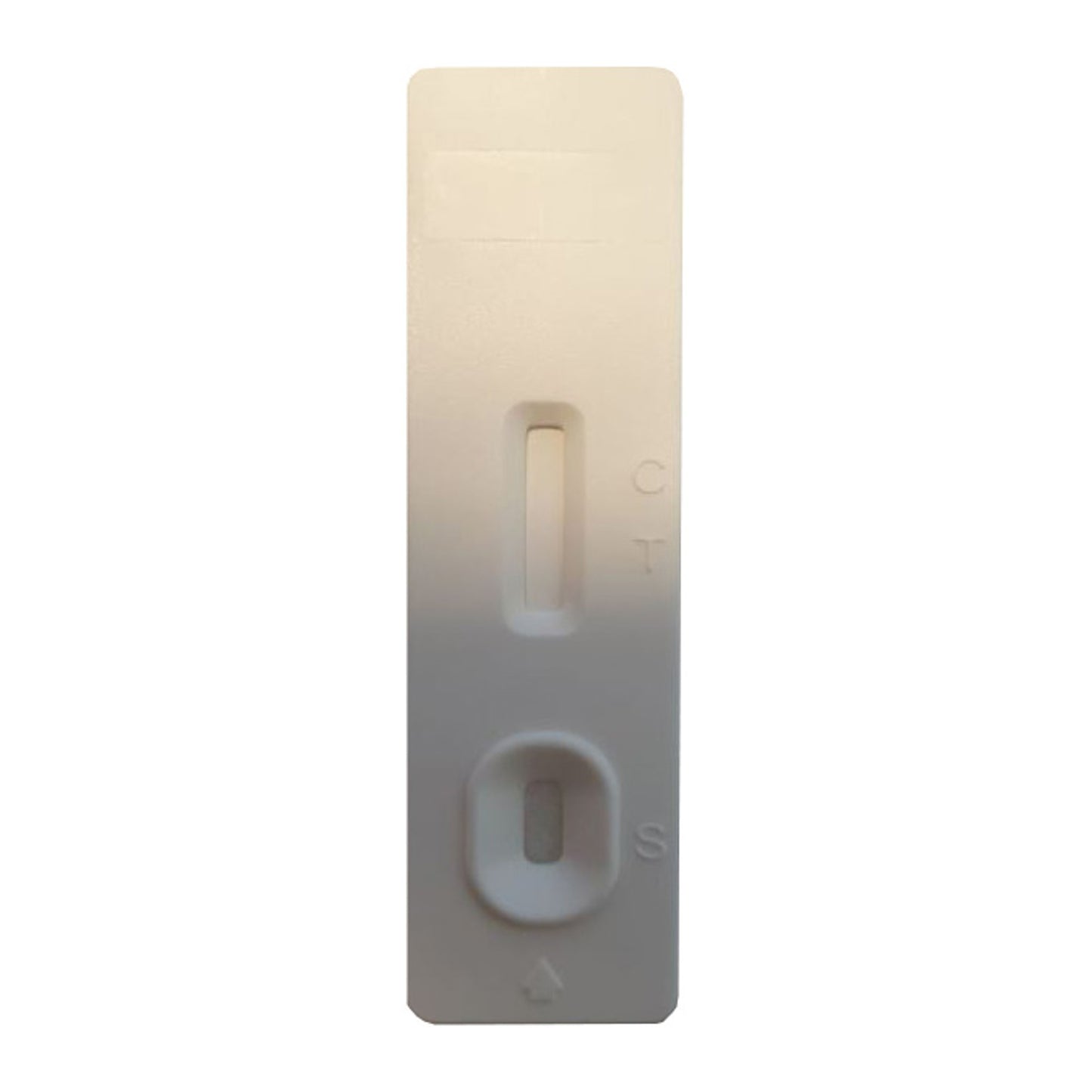
The VivaDiagTM SARS-CoV-2 test is a rapid test for the qualitative detection of the SARS-CoV-2 nucleocapsid protein antigen in human nasal, oropharyngeal, and nasopharyngeal swab samples. The test is an in vitro diagnostic and for professional use only. It is intended for clinical laboratories and to be used by healthcare professionals in care centers. It is not intended for self-testing. The VivaDiagTM SARS-CoV-2 test is based on immunoassay technology. Each test consists of a detection band of anti-SARS coronavirus monoclonal antibody (T line) and an anti-human rat IgG polyclonal antibody on the quality control band (C line). Once the sample is collected and placed in the well, it reacts with the aforementioned antibodies to form a complex. The mixture is absorbed, rises through the membrane by capillary action, and interacts with the anti-SARS coronavirus monoclonal antibody coating the detection band. If the sample contains the SARS-CoV-2 antigen, the detection band will appear purplish-red, indicating positivity. Otherwise, the test result will be negative. The test cassette also contains a quality control band: C, which will appear purplish-red for all valid tests. If the quality control band C does not appear, the test result cannot be considered valid even if the detection band appears.
How to use
Sample collection
1) Nasal swab sample.
- Nasal swab sample.
Obtain as much secretion as possible. Insert the sterile swab into one nostril. The tip of the swab should be inserted up to 2.5 cm (1 inch) from the edge of the nostril. Rotate the swab 5 times along the mucosa inside the nostril to ensure that both mucus and cells are collected. Repeat this procedure for the other nostril to ensure the collection of the correct amount of sample from both nasal cavities (use the same swab).
- Oropharyngeal swab sample.
Obtain as much secretion as possible. Insert the sterile swab into the throat where most of the secretion is present, i.e., in the mucosa of the wall and tonsils. Gently rub against the mucosa of the pharynx and tonsils on both sides and against the back of the throat. Please do not touch the tongue when removing the swab.
- Nasopharyngeal swab sample (optional)
Obtain as much secretion as possible. Insert the sterile swab into the nostril with the most secretion. Keep the swab close to the nasal septum wall, gently pushing it into the posterior nasopharynx. Rotate the swab 5 times, then remove it from the nasopharynx.
2) Sample treatment
Newly collected samples should be tested as soon as possible. It is essential to correctly perform sample collection and preparation procedures.
Procedure for performing the test:
Allow the device and reagent solution to reach a temperature of 15-30°C before performing the test.
1. Remove the top of the sealed bottle then open it. Place the bottle upright and allow all the reagent solution to flow into the bulb of the tube.
2. Collect the sample. See the "Sample collection" section.
3. Place the sterile swab with the sample inside the tube. Press the head of the swab against the tube from the outside while removing it, then try to release as much liquid as possible. Dispose of the used swab in biohazard waste.
4. Close the tube with the appropriate dispenser included in the kit.
5. Remove a device from the aluminum foil pouch and place it on a clean, flat surface.
6. Add 3 drops (approximately 60 mcl) of extracted sample into the well of the device.
7. Read the test result ONLY after 15 minutes or it will no longer be reliable.
Note:
- Do not exchange or mix reagent solution from different lots.
- Handle the solution carefully; avoid contact with eyes or skin. If contact occurs, wash thoroughly with water.
- Please follow local regulations for the disposal of used materials.
Interpretation of test results
1. Positive result: both the quality control band C and the detection band T are displayed.
2. Negative result: only the quality control band C is displayed.
3. Invalid result: the quality control band C is not displayed, indicating that the test is invalid, regardless of whether the detection band is displayed or not. Collect a new sample and perform another test with a new device.
Quality control
A colored band displayed in the control area (C) is intended as an internal procedural control. It confirms sufficient sample volume and correct test execution. Control standards are not supplied with this kit; however, it is recommended to perform tests in a good laboratory to ensure that the protocol is executed correctly.
Warnings
- SARS-CoV-2 antigen test results should not be used as the sole basis for diagnosing or excluding SARS-CoV-2 infection or for informing infection status.
- Negative results do not rule out SARS-COV-2 infection, particularly in those who have been in contact with the virus. Only a follow-up test with molecular diagnostics and/or CT could definitively exclude infection in these individuals.
- Positive results may be due to existing infections of SARS-coronavirus strains; refer to the "cross-reactivity" section for details. Follow-up tests with molecular diagnostics and/or CT may be considered to confirm the test result.
- For in vitro diagnostic use only.
- Not for self-testing.
- Further molecular diagnostics and/or CT are recommended to identify the actual physical situation.
- Do not open the foil pouch of the device, exposing it to the environment, unless immediately before use.
- Do not use any device or other kit material if damaged.
- Do not reuse the same device.
- Handle the reagent solution carefully; avoid contact with eyes or skin. If contact occurs, wash thoroughly with water.
- Do not use the kit beyond the expiration date.
- Specific training is recommended if operators are inexperienced with the sample collection and use procedure.
- Use only nasal, nasopharyngeal, and oropharyngeal swabs. Follow the protocol specified in the instructions for use to obtain accurate results.
- Wear protective equipment such as laboratory coats, disposable gloves, and safety glasses during sample collection and evaluation.
- Wash hands thoroughly before and after performing the test.
- All kit components are considered biohazardous and can potentially transmit infectious diseases from bloodborne pathogens, even after cleaning and disinfection.
- Follow all local regulations for the disposal of used kit components.
Caution: for professional use only, cannot be used for self-testing.
Storage
- Store the kit in a cool, dry place between 2 and 30 degrees Celsius. Keep away from light. Exposure to temperature and/or humidity outside the specified conditions can lead to inaccurate results.
- Do not freeze or refrigerate. Use the kit at temperatures between 15 and 30 degrees Celsius.
- Use the test with a humidity rate between 10-90%.
- Do not use the kit beyond the expiration date (printed on the wrapper and box).
Format
Each kit contains: device, sealed vial (already filled with 300 mcl of reagent solution), tube, dispensing cap, tube holder, sterile swab, and instruction leaflet.
Required materials that may not be provided: timer.
Code. VCD05-01-014
Bibliography
1. Coronaviridae Study Group of the International Committee on Taxonomy of Viruses. The species severe acute respiratory syndrome-related coronavirus: classifying 2019-nCoV and naming it SARS CoV-2 [J]. Nature Microbiology, 5, 536-544 (2020).
2. Perlman, S. Netland, J. Coronaviruses post-SARS: update on replication and pathogenesis.Nature Reviews Microbiology 7, 439-450, doi: 10.1038/nrmicro2147 (2009).
3. Lauer SA, Grantz KH, Bi Q, et al. The Incubation Period of Coronavirus Disease 2019 (COVID-19) From Publicly Reported Confirmed Cases: Estimation and Application. Ann Intern Med. 2020; 172(9): 577-582. doi: 10.7326/M20-0504.
The VivaDiagTM SARS-CoV-2 test is a rapid test for the qualitative detection of the SARS-CoV-2 nucleocapsid protein antigen in human nasal, oropharyngeal, and nasopharyngeal swab samples. The test is an in vitro diagnostic and for professional use only. It is intended for clinical laboratories and to be used by healthcare professionals in care centers. It is not intended for self-testing. The VivaDiagTM SARS-CoV-2 test is based on immunoassay technology. Each test consists of a detection band of anti-SARS coronavirus monoclonal antibody (T line) and an anti-human rat IgG polyclonal antibody on the quality control band (C line). Once the sample is collected and placed in the well, it reacts with the aforementioned antibodies to form a complex. The mixture is absorbed, rises through the membrane by capillary action, and interacts with the anti-SARS coronavirus monoclonal antibody coating the detection band. If the sample contains the SARS-CoV-2 antigen, the detection band will appear purplish-red, indicating positivity. Otherwise, the test result will be negative. The test cassette also contains a quality control band: C, which will appear purplish-red for all valid tests. If the quality control band C does not appear, the test result cannot be considered valid even if the detection band appears.
How to use
Sample collection
1) Nasal swab sample.
- Nasal swab sample.
Obtain as much secretion as possible. Insert the sterile swab into one nostril. The tip of the swab should be inserted up to 2.5 cm (1 inch) from the edge of the nostril. Rotate the swab 5 times along the mucosa inside the nostril to ensure that both mucus and cells are collected. Repeat this procedure for the other nostril to ensure the collection of the correct amount of sample from both nasal cavities (use the same swab).
- Oropharyngeal swab sample.
Obtain as much secretion as possible. Insert the sterile swab into the throat where most of the secretion is present, i.e., in the mucosa of the wall and tonsils. Gently rub against the mucosa of the pharynx and tonsils on both sides and against the back of the throat. Please do not touch the tongue when removing the swab.
- Nasopharyngeal swab sample (optional)
Obtain as much secretion as possible. Insert the sterile swab into the nostril with the most secretion. Keep the swab close to the nasal septum wall, gently pushing it into the posterior nasopharynx. Rotate the swab 5 times, then remove it from the nasopharynx.
2) Sample treatment
Newly collected samples should be tested as soon as possible. It is essential to correctly perform sample collection and preparation procedures.
Procedure for performing the test:
Allow the device and reagent solution to reach a temperature of 15-30°C before performing the test.
1. Remove the top of the sealed bottle then open it. Place the bottle upright and allow all the reagent solution to flow into the bulb of the tube.
2. Collect the sample. See the "Sample collection" section.
3. Place the sterile swab with the sample inside the tube. Press the head of the swab against the tube from the outside while removing it, then try to release as much liquid as possible. Dispose of the used swab in biohazard waste.
4. Close the tube with the appropriate dispenser included in the kit.
5. Remove a device from the aluminum foil pouch and place it on a clean, flat surface.
6. Add 3 drops (approximately 60 mcl) of extracted sample into the well of the device.
7. Read the test result ONLY after 15 minutes or it will no longer be reliable.
Note:
- Do not exchange or mix reagent solution from different lots.
- Handle the solution carefully; avoid contact with eyes or skin. If contact occurs, wash thoroughly with water.
- Please follow local regulations for the disposal of used materials.
Interpretation of test results
1. Positive result: both the quality control band C and the detection band T are displayed.
2. Negative result: only the quality control band C is displayed.
3. Invalid result: the quality control band C is not displayed, indicating that the test is invalid, regardless of whether the detection band is displayed or not. Collect a new sample and perform another test with a new device.
Quality control
A colored band displayed in the control area (C) is intended as an internal procedural control. It confirms sufficient sample volume and correct test execution. Control standards are not supplied with this kit; however, it is recommended to perform tests in a good laboratory to ensure that the protocol is executed correctly.
Warnings
- SARS-CoV-2 antigen test results should not be used as the sole basis for diagnosing or excluding SARS-CoV-2 infection or for informing infection status.
- Negative results do not rule out SARS-COV-2 infection, particularly in those who have been in contact with the virus. Only a follow-up test with molecular diagnostics and/or CT could definitively exclude infection in these individuals.
- Positive results may be due to existing infections of SARS-coronavirus strains; refer to the "cross-reactivity" section for details. Follow-up tests with molecular diagnostics and/or CT may be considered to confirm the test result.
- For in vitro diagnostic use only.
- Not for self-testing.
- Further molecular diagnostics and/or CT are recommended to identify the actual physical situation.
- Do not open the foil pouch of the device, exposing it to the environment, unless immediately before use.
- Do not use any device or other kit material if damaged.
- Do not reuse the same device.
- Handle the reagent solution carefully; avoid contact with eyes or skin. If contact occurs, wash thoroughly with water.
- Do not use the kit beyond the expiration date.
- Specific training is recommended if operators are inexperienced with the sample collection and use procedure.
- Use only nasal, nasopharyngeal, and oropharyngeal swabs. Follow the protocol specified in the instructions for use to obtain accurate results.
- Wear protective equipment such as laboratory coats, disposable gloves, and safety glasses during sample collection and evaluation.
- Wash hands thoroughly before and after performing the test.
- All kit components are considered biohazardous and can potentially transmit infectious diseases from bloodborne pathogens, even after cleaning and disinfection.
- Follow all local regulations for the disposal of used kit components.
Caution: for professional use only, cannot be used for self-testing.
Storage
- Store the kit in a cool, dry place between 2 and 30 degrees Celsius. Keep away from light. Exposure to temperature and/or humidity outside the specified conditions can lead to inaccurate results.
- Do not freeze or refrigerate. Use the kit at temperatures between 15 and 30 degrees Celsius.
- Use the test with a humidity rate between 10-90%.
- Do not use the kit beyond the expiration date (printed on the wrapper and box).
Format
Each kit contains: device, sealed vial (already filled with 300 mcl of reagent solution), tube, dispensing cap, tube holder, sterile swab, and instruction leaflet.
Required materials that may not be provided: timer.
Code. VCD05-01-014
Bibliography
1. Coronaviridae Study Group of the International Committee on Taxonomy of Viruses. The species severe acute respiratory syndrome-related coronavirus: classifying 2019-nCoV and naming it SARS CoV-2 [J]. Nature Microbiology, 5, 536-544 (2020).
2. Perlman, S. Netland, J. Coronaviruses post-SARS: update on replication and pathogenesis.Nature Reviews Microbiology 7, 439-450, doi: 10.1038/nrmicro2147 (2009).
3. Lauer SA, Grantz KH, Bi Q, et al. The Incubation Period of Coronavirus Disease 2019 (COVID-19) From Publicly Reported Confirmed Cases: Estimation and Application. Ann Intern Med. 2020; 172(9): 577-582. doi: 10.7326/M20-0504.
Share