1
/
of
1
LIPHATECH SAS
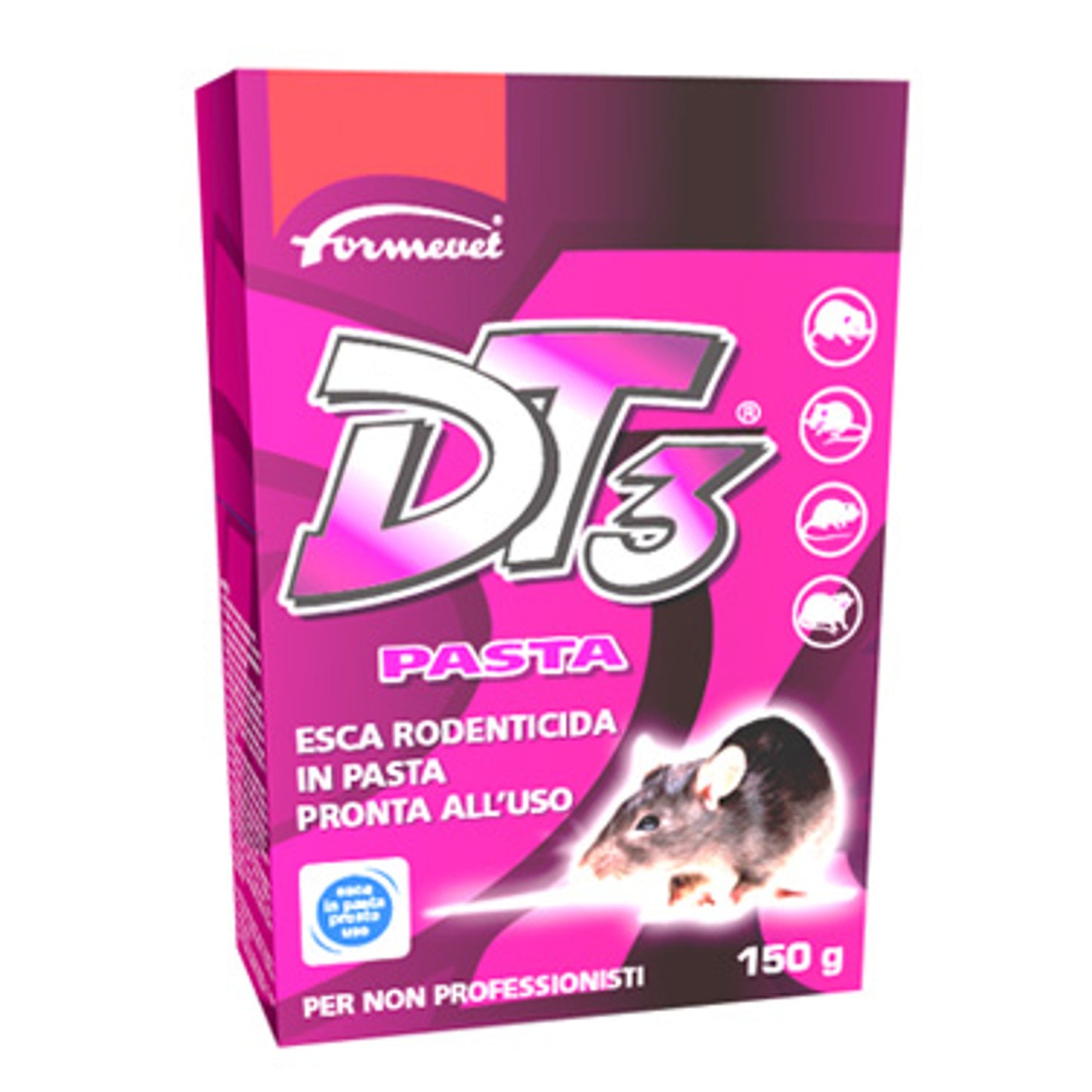
Dt3 Ready-To-Use Rodenticide Bait Pasta 150 G
Dt3 Ready-To-Use Rodenticide Bait Pasta 150 G
Regular price
€6,80 EUR
Regular price
€8,00 EUR
Sale price
€6,80 EUR
Taxes included.
Shipping calculated at checkout.
Quantity
Couldn't load pickup availability
MINSAN: 942601550
EAN: 8033638272787
DITTA: LIPHATECH SAS
DT3
PASTA
Description
Ready-to-use rodenticide bait based on an anticoagulant active substance, known as difethialone, effective against house mice (Mus musculus), brown rats (Rattus norvegicus) and black rats (Rattus rattus) even after a single ingestion.
DT3 PASTA contains a bittering agent (denatonium benzoate) to reduce the risk of accidental ingestion by children and a dye.
DT3 PASTA can be used indoors (mice and rats) and outdoors (rats) in industrial, rural, civil buildings, warehouses, homes, cellars, garages, storage rooms. Due to their delayed mode of action, anticoagulant rodenticides may take 4 to 10 days after bait ingestion to be effective.
Instructions for use
Read and follow the product instructions before use, as well as the information accompanying the product or provided at the point of sale.
Remove easily accessible food sources for rodents (e.g., spilled grains or food scraps). Also, do not clean the infested area immediately before treatment, as this only disturbs the rodent population and makes it more difficult to achieve bait acceptance.
Where possible, secure bait stations to the ground or other structures.
Do not eat, drink, or smoke while using the product. Wash hands and directly exposed skin after using the product.
Do not open the sachets containing the baits.
Consider non-chemical control mechanisms (e.g., traps) before using rodenticide products.
Bait stations must be placed in the immediate vicinity of places where rodent activity has been previously observed (e.g., runways, nests, animal entry points, openings, burrows).
Place the product out of reach of children, birds, pets, farm animals, and other non-target animals.
Place the product away from food, beverages, and animal feed, as well as utensils or surfaces that may come into contact with the product.
Do not place bait stations near water drainage systems as the bait could come into contact with water.
Replace bait in stations if damaged by water or contaminated by dirt.
Place bait points in areas not subject to flooding.
At the end of the treatment period, remove any remaining bait or bait stations.
MICE: up to 50 g of bait per station. If more bait stations are needed, place them at a minimum distance of 1-1.5 meters from each other (indoors).
RATS: up to 150 g of bait per station. If more bait stations are needed, place them at a minimum distance of 4-5 meters from each other (indoors/around buildings).
Bait stations should be checked at least every 2-3 days for mice and every 5-7 days for rats at the beginning of treatment and at least weekly thereafter, to check if the bait is accepted, the stations are intact, and to remove rodent carcasses.
Refill the station when necessary.
Composition
Difethialone, denatonium benzoate, dye.
Warnings
Dispose of dead rodents according to current regulations.
Do not use anticoagulant rodenticides as permanent baits (e.g., to prevent infestations or to monitor rodent activity).
Use of this product should eliminate rodents within 35 days. Product information must clearly suggest that in case of suspected ineffectiveness at the end of treatment (e.g., rodent activity is still observed), the user should seek advice from the product supplier or call a Pest Control Service.
Check for dead rodents and remove them during treatment, at least as frequently as bait stations are visited. Rodents can carry diseases. Do not touch dead rodents with bare hands: use gloves or tools such as tongs for their disposal.
At the end of treatment, dispose of unused bait and packaging according to current regulations. The tamper-proof bait stations must be marked: "do not move or open"; "contains a rodenticide"; "product name or authorization number"; "active substance(s)" and "in case of accident, consult a Poison Control Center (112)".
May cause damage to organs (blood) through prolonged or repeated exposure. Harmful to aquatic life with long lasting effects.
Do not release into the environment. If you feel unwell, consult a doctor. Dispose of product/container in accordance with current regulations. Dangerous to wildlife. Dangerous to dogs and cats.
Information for doctors
This product contains an anticoagulant substance.
If ingested, symptoms, which may be delayed, can include bleeding from the nose or gums. In severe cases, bruising and blood in feces and urine may occur.
Antidote: Vitamin K1 can only be administered by medical/veterinary personnel.
In case of: skin exposure, wash skin with water and then with soap and water; eye exposure, rinse eyes with water or eyewash fluid, keep eyelids open for at least 10 minutes; oral exposure, rinse mouth thoroughly with water.
Do not give anything by mouth to an unconscious person.
Do not induce vomiting.
In case of ingestion, immediately contact a doctor and show them the container or product label.
Contact a veterinarian in case of ingestion by a pet.
Storage
Store in a dry, cool, and well-ventilated place.
Keep the container closed and away from direct sunlight.
Store in a place inaccessible to children, birds, pets, and farm animals.
Format
Packaging: 150 g, containing 10 g sachets each, sold in bait packs.
Code 14096300
Ready-to-use rodenticide bait based on an anticoagulant active substance, known as difethialone, effective against house mice (Mus musculus), brown rats (Rattus norvegicus) and black rats (Rattus rattus) even after a single ingestion.
DT3 PASTA contains a bittering agent (denatonium benzoate) to reduce the risk of accidental ingestion by children and a dye.
DT3 PASTA can be used indoors (mice and rats) and outdoors (rats) in industrial, rural, civil buildings, warehouses, homes, cellars, garages, storage rooms. Due to their delayed mode of action, anticoagulant rodenticides may take 4 to 10 days after bait ingestion to be effective.
Instructions for use
Read and follow the product instructions before use, as well as the information accompanying the product or provided at the point of sale.
Remove easily accessible food sources for rodents (e.g., spilled grains or food scraps). Also, do not clean the infested area immediately before treatment, as this only disturbs the rodent population and makes it more difficult to achieve bait acceptance.
Where possible, secure bait stations to the ground or other structures.
Do not eat, drink, or smoke while using the product. Wash hands and directly exposed skin after using the product.
Do not open the sachets containing the baits.
Consider non-chemical control mechanisms (e.g., traps) before using rodenticide products.
Bait stations must be placed in the immediate vicinity of places where rodent activity has been previously observed (e.g., runways, nests, animal entry points, openings, burrows).
Place the product out of reach of children, birds, pets, farm animals, and other non-target animals.
Place the product away from food, beverages, and animal feed, as well as utensils or surfaces that may come into contact with the product.
Do not place bait stations near water drainage systems as the bait could come into contact with water.
Replace bait in stations if damaged by water or contaminated by dirt.
Place bait points in areas not subject to flooding.
At the end of the treatment period, remove any remaining bait or bait stations.
MICE: up to 50 g of bait per station. If more bait stations are needed, place them at a minimum distance of 1-1.5 meters from each other (indoors).
RATS: up to 150 g of bait per station. If more bait stations are needed, place them at a minimum distance of 4-5 meters from each other (indoors/around buildings).
Bait stations should be checked at least every 2-3 days for mice and every 5-7 days for rats at the beginning of treatment and at least weekly thereafter, to check if the bait is accepted, the stations are intact, and to remove rodent carcasses.
Refill the station when necessary.
Composition
Difethialone, denatonium benzoate, dye.
Warnings
Dispose of dead rodents according to current regulations.
Do not use anticoagulant rodenticides as permanent baits (e.g., to prevent infestations or to monitor rodent activity).
Use of this product should eliminate rodents within 35 days. Product information must clearly suggest that in case of suspected ineffectiveness at the end of treatment (e.g., rodent activity is still observed), the user should seek advice from the product supplier or call a Pest Control Service.
Check for dead rodents and remove them during treatment, at least as frequently as bait stations are visited. Rodents can carry diseases. Do not touch dead rodents with bare hands: use gloves or tools such as tongs for their disposal.
At the end of treatment, dispose of unused bait and packaging according to current regulations. The tamper-proof bait stations must be marked: "do not move or open"; "contains a rodenticide"; "product name or authorization number"; "active substance(s)" and "in case of accident, consult a Poison Control Center (112)".
May cause damage to organs (blood) through prolonged or repeated exposure. Harmful to aquatic life with long lasting effects.
Do not release into the environment. If you feel unwell, consult a doctor. Dispose of product/container in accordance with current regulations. Dangerous to wildlife. Dangerous to dogs and cats.
Information for doctors
This product contains an anticoagulant substance.
If ingested, symptoms, which may be delayed, can include bleeding from the nose or gums. In severe cases, bruising and blood in feces and urine may occur.
Antidote: Vitamin K1 can only be administered by medical/veterinary personnel.
In case of: skin exposure, wash skin with water and then with soap and water; eye exposure, rinse eyes with water or eyewash fluid, keep eyelids open for at least 10 minutes; oral exposure, rinse mouth thoroughly with water.
Do not give anything by mouth to an unconscious person.
Do not induce vomiting.
In case of ingestion, immediately contact a doctor and show them the container or product label.
Contact a veterinarian in case of ingestion by a pet.
Storage
Store in a dry, cool, and well-ventilated place.
Keep the container closed and away from direct sunlight.
Store in a place inaccessible to children, birds, pets, and farm animals.
Format
Packaging: 150 g, containing 10 g sachets each, sold in bait packs.
Code 14096300
Share